• Bio

Rebecca Jane

  • Be Dark, Soft Earth

    November 8th, 2025

    This post was Originally published on this blog in April 2020

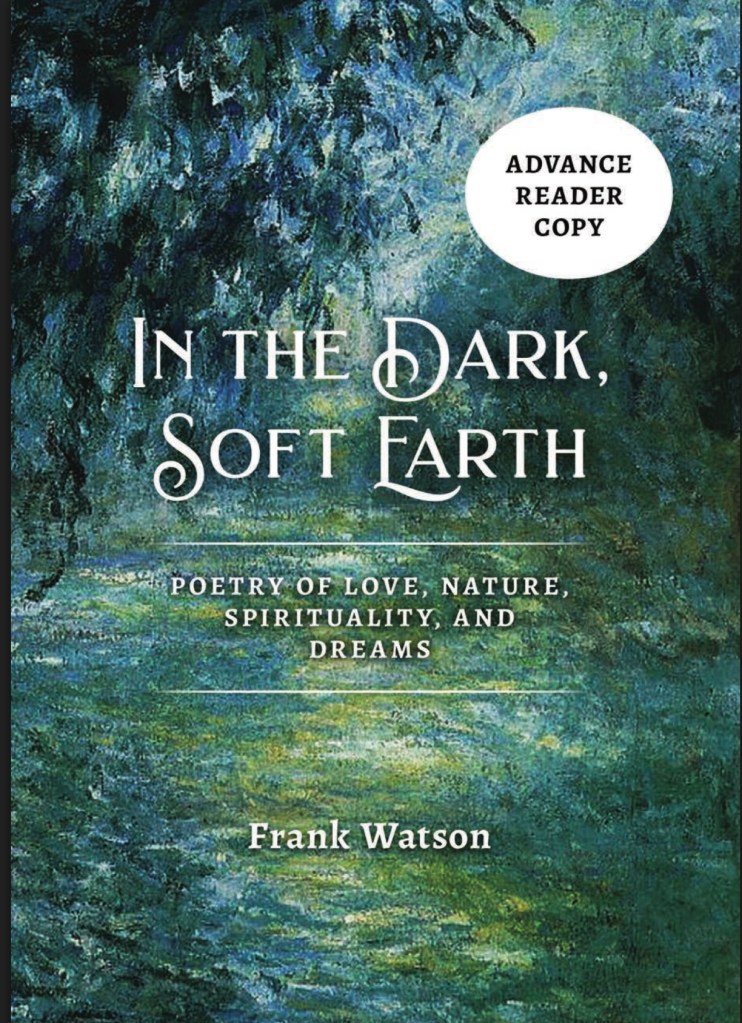
    The poet Frank Watson has given humanity a gift, a collection of poems entitled In the Dark, Soft Earth: Poetry of Love, Nature, Spirituality, and Dreams.

    weeping woods

    Book One is called “Within the Weeping Woods.” Each poem, very short, conjures the spirit of the nature haiku. Here, we are offered a chance to forest bathe the mind. Reading these poems is a wilderness adventure that tangles up desire, and I feel myself hearing my heart beat inside the forest and beneath its soil. This inner forest is dense with secret glades in which a reader can hide within forest Silence. There is intimacy but also distance that soothes. Though many scenes revealed here are absolutely terrifying, the language is so stunning that terror is totally erased by beauty. We become like the fool who, “entranced / by the beauty of a rose / he falls off a cliff / blown only by the gentle breeze.” Here, terrifying things are delivered gently. Also, it’s remarkable the way each stanza feels natural and not crafted, as if words simply blew in through the poet’s heart on the breeze. Effortless poetry! Ah!

    dust

    The poems in this collection can also create a sense of being a speck of dust, traveling free upon the wind and upon the wind’s whims; can I be so quiet, content, and unnoticed, even as I am thrust upon violent storms, even as I am settled home, longing we meet in a crowded jazz club? I read the collection while sitting under this tree in my front yard. I hear jazz music through the kitchen’s open window. Crows laugh. Dogs bark. Insects crawl nearby, and the wind is moving the trees. I notice nature with nuanced perception while I am reading Watson’s poems. This is reason enough to give this book a read and to read it again. I love the mood each poem evokes in me, like I am making love to the Mystery. It reminds me also of time I have spent sitting in dark temples, and one distant memory of practicing “Grave Meditation” with yogis in the Himalayas.
    Grateful to Frank Watson and Plum White Press for the ARC
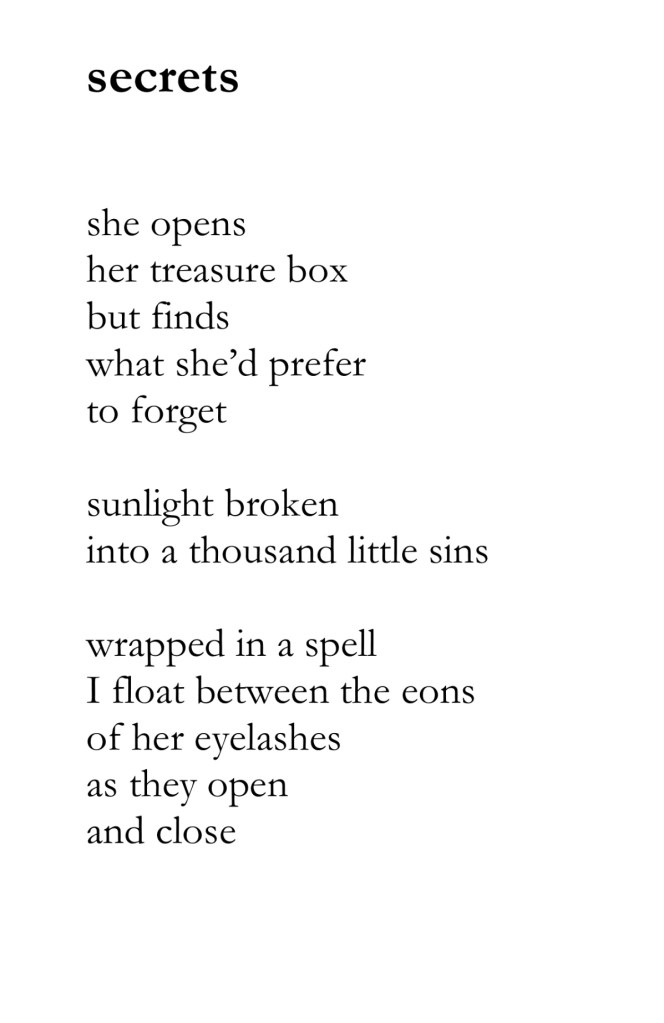
    from In the Dark, Soft Earth by Frank Watson

    eons

    This particular poem welcomes the reader to witness a moment where the she of the poem confronts a secret she has been keeping from herself. She realizes an ugly truth, an inner truth that she had tried to ignore or suppress; yet, she had also stored it away in her treasure box. What a provocative juxtaposition! Then, an image arises in a simple phrase that hints at mischief, but it’s the sound of the words that is more important than their meaning: “sunlight broken / into a thousand little sins.” Then, the best part of the poem, is that the speaker, the I, the narrator of the poem, is but an invisible speck, some kind of micro-organism, somehow bewitched and floating “between the eons of her eyelashes.” This is an incredible shift in perspective. As a reader proceeding through a few short phrases, I have even forgotten to wonder what is the secret in the treasure box because I am now enraptured by the wonder about myself as dwelling between the eons of her eyelashes, contemplating myself as a floating micro-organism. Whoever “she” is in this poem, she is of goddess dimensions, and I am filled with awe.

    This is just one poem from this collection. Every poem takes the reader on vast journeys through perception. Yet, the poems are immaculately short, distilled moments that trigger ancient contemplation. Spiritual awakening gets slammed together with lots of kissing of the Earth, kissing of moonlit waters, even kissing of the dead. The whole experience satisfies Spirit and sense perception all at once. And the Spirit world and the sensual world can be one, and this is absolutely OKAY, dear yogi! Plus, for viewing pleasure, the book contains artwork by a variety of masters, ranging from Keido Fukushima to Wassily Kandinsky, alongside the poems these works inspired in Watson.

    butterfly

    The collection is divided into ten “Books.” Each book has its own title, such as “Between Time and Space,” “The Percussion Mind,” and “Stories Before I Sleep.” The ideas and moods that these titles provoke invite me into contemplative space. I sit quietly, and I am content. That’s it!

    While there are weeping woods, there is also jazz. And these haiku-like poems create a sense that the primal cries before humanity, with Earth always expressing herself in infinite variety, are not separate from the contemporary moans of urban music. We enter a consciousness where desire is a dream state, and I find myself longing to reunite with my Lover and give him the world’s last drop of rain, or the raven moon, or a road he may travel that will never end. I imagine the I of the poem to be my happy lover telling me that he lives his life in a butterfly’s dream. He reminds me of the Taoist adept, Zhuangze: keep life weightless. I wish I could say this to someone: if I am in your butterfly dream, may I be perceived as the nectar?

    kiss

    Finally, with this book, I find myself retreating again to the yogi cave within me and welcoming a gang of midnight philosophers to help me light the One Heart Fire at the hour when all across the globe, each has agreed to light his own lamp. If we build up enough nerve, we’ll all whisper: “We know how to guide the stranded souls. Look, over here! See how there is so very little distinction between what is a human form and what is Earth form? Be guided by the rhyme in twilight! See poems pouring tea for the Haiku that breaks the rules. Understand that which feels familiar is a bridge to mischief! Let’s cross together!”

    In the poem “apparition,” there is a broken violin and some shapeless wonder that is rolling from one end of the world to another. Is it the poet that kisses Earth and moonlit waters and sunflowers? Or is it that the poet has become the foot or the lightbeam or the raindrop that touches the forest floor, the lake’s surface, or the flower’s petal? I have got to remember to be grateful for these poems that give me a fleeting chance to release my attachment to this human body. Be a drop of rain. Be a moon beam. Be a bear paw. And once I become these things, what does it feel like to touch flowers, lakes, and dirt?

    who am I?

    Who is the poet? He is “neither man / nor phantom / between the worlds.” Who am I? I ask again as I re-emerge from the dream of reading this collection. I stand up from sitting beneath this tree, and standing up after having read this book is the realization that this was not a dream. This deep peace within me is the real deal.

    Frank Watson’s In the Dark, Soft Earth is a beautiful book. I hope you will read it, and allow it to guide you to enjoy your Self, thoroughly.

  • Forest Gazing to Soothe The Eyes

    October 30th, 2024

    Can you find these images in the photo?

    • The Enchanted Raven
    • Nandinadada, The Sacred Bull, crowned with flowers
    • The Goblet of Everlasting Nectar
    • Rings that reveal the age of the Tree of Knowledge
    • The path the leads to the beginning of Time

    You found the treasure? Too easy, right? Bravo! You are naturally gifted. Or maybe you strained and won’t find them? Perhaps you don’t have time for this silly game? But I can assure you that I am grateful you took a moment to visit here and seek to find the Goblet of Everlasting Nectar. Yes! Breathe in deeply, a victory breath! You are a poem, and you inspire me. Where the gaze goes, where the attention goes, so goes prana (energy).

    All eyes on trees!

    May Infinite Peace Be Our Shared Reality!

  • A Satire of Religion, War, Literature, Politics, Heroism, & Civilization

    October 28th, 2024

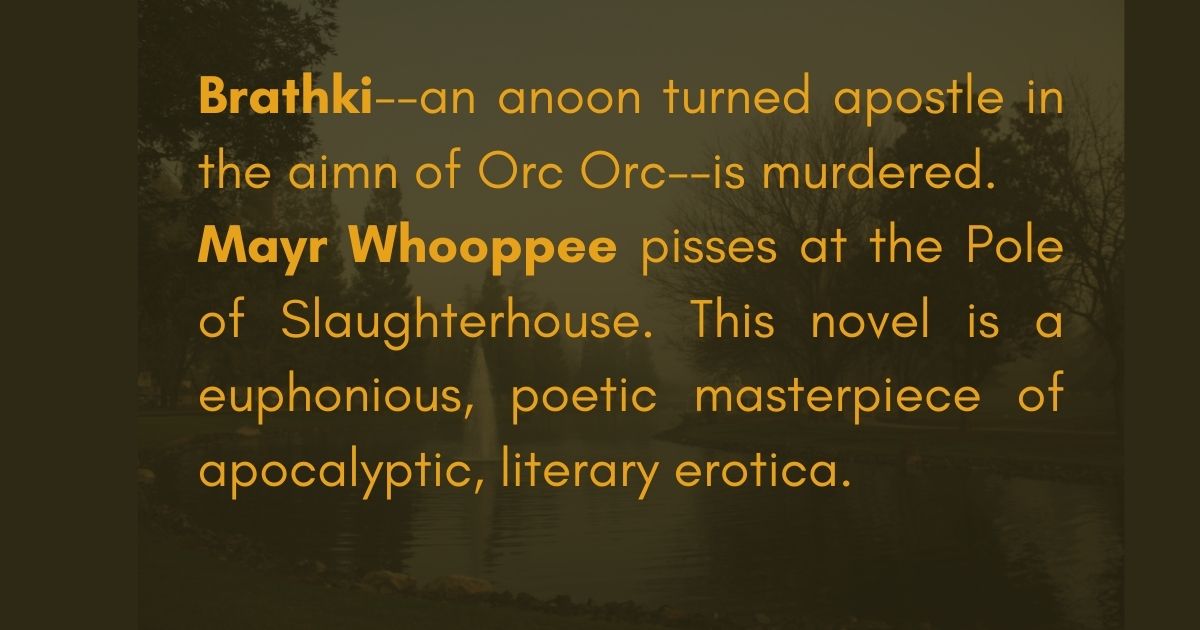
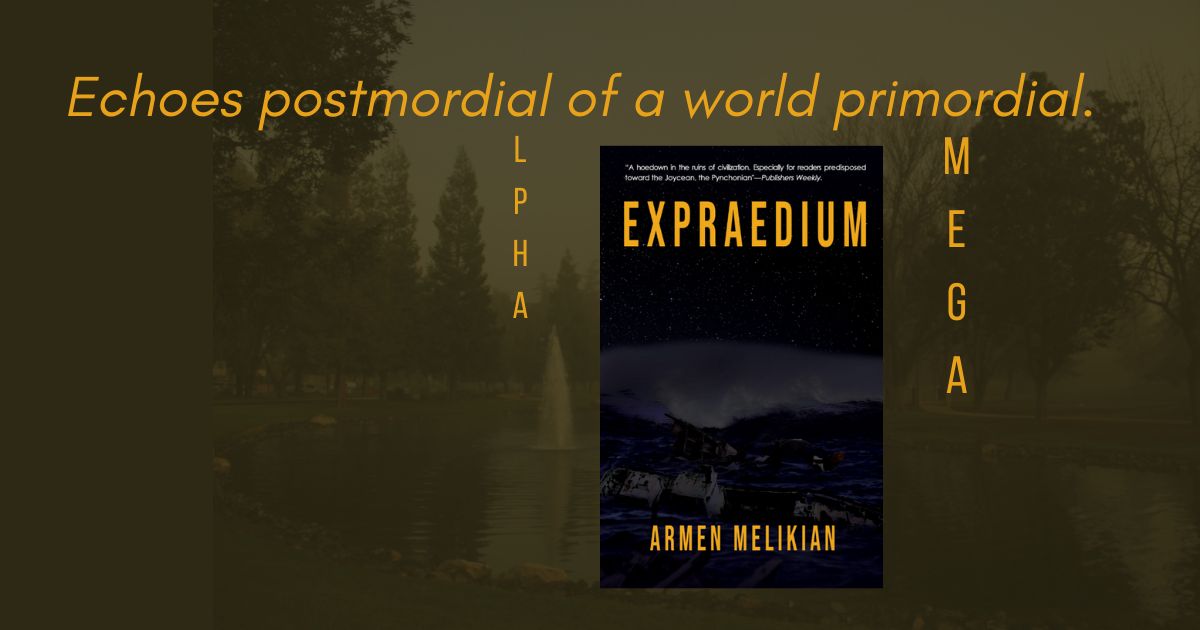
    A sestina book review of Expraedium by Aremen Melikian

    Title: EXPRAEDIUM
    Author: Armen Melikian
    Publisher: Erzenka Publishing House
    Release Date: December 1, 2023
    ISBN: 978-0-971870-5-1

    Piss on tyranny’s bookmorgue experiment,
    Brathki, our hero in anti sheep’s clothing, strips to flesh in language,
    breathes fantasy in dissonance amidst euphonious dread.
    Euphoric dystopias smooth topical cream over epic erotics.
    For readers who love savoring Slow Cognitive Powerlifting,
    this novel breaks every rule/every word, laughing, shakes the story.

    Mystery meets mysticism’s mistaken identity in embattled lands of story,
    pleas cease fire Zinzinoid insurrection in Hambergerland, arms experiments.
    But funny Brathki antics make bulging cheeks do all the powerlifting.
    Characters like Baba Boosh and Milk Lord Orcon speak one language
    while twin sisters impart Brathki love of diabolical divine erotica
    so as to be the one who transubstantiates, soothing all anoon dread.

    No plot, but an umbilicum subcurrent scheme of deific dread.
    Minds take off their clothes to be naked with Ea’s primal hushstory.
    Omega seduces Alpha with four waves of poetic eroticism,
    tricking bipeds into believing the Holy Hoshhosh war-torn experiment,
    despots, dragons, icons, pimperial narcissists breathe sulfuric language—
    the hushstorical record of Brathki’s dreamspeak portends powerlifting.

    Tyranny, genocide, divine epic, dirty jokes at the poetic powerlift,
    this is a novel in reVerse playing reverence to the Dread.
    YawaYawa, god Ubaratutuans create mythanoia of far-off language
    to form a cosmic brotherhood to erase the biped and natoton stories,
    to slow the “Everything will become its opposite” experiment,
    and to see: can oratory beat love’s hypothesis into Academonic Erotics?

    Two thousand years of evolutionary hushstory reveal Eros’
    post-life promises. Who’s brother who’s enemy in arenas of powerlifters?
    Ground opens; the dead walk; all hate skews absurd experiments.
    After uprisings, rise and fall all Civilizations of Dread,
    stolen sacred texts are, dead scrolls from dead seas swallowing stories
    of the Urmashuan lunar god. Hideology is a real word in this language.

    Brave reader, love you some anarchy of words baffling language?
    If yes, and you seek to rub the pornographer’s stone against erotic
    incomprehension while your brain craves mayhem, then Brathki’s story!
    Regimes, rebellions, wrathful deities devour traditions, powerlifting
    humanity’s spirit with no memory of the civilizations rewritten by Dread.
    Dare to read this book and donate your mind to a mad science experiment!

    Experiment with or without and within language.
    Holy Dread gnashing teeth on eros is to logos as rigor is to erotica.
    Powerlift a guerrilla chopper as rotor blades shape sky into story.

    ©Rebecca Jane Johnson, 2024

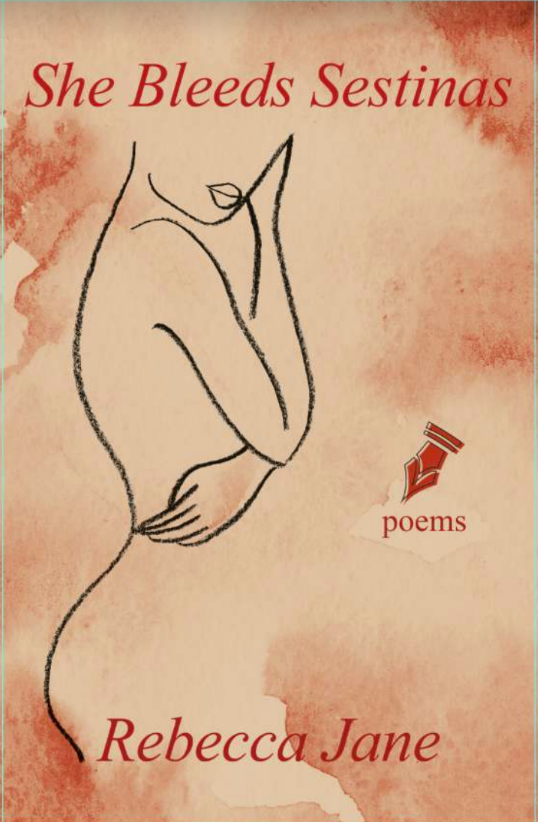
    Rebecca Jane is the author of She Bleeds Sestinas (Atmosphere Press 2023).

  • A Chorus Line & Beyond: Kelly Bishop’s Inspiring Life Story

    October 21st, 2024

    Title: The Third Gilmore Girl: a memoir
    Author: Kelly Bishop
    Publisher: Gallery Books
    Release Date: September 17, 2024
    ISBN: 978-1-6680-2377-8

    {Book review written in sestina form.}

    Kelly Bishop’s mother gave her freedom.  
    Rise above ironing a philanderer’s shirts; choose not to have children.  
    The ballet, a haven, a place to escape, a girl could air her flair.
    Discipline, joy, and endurance shaped Bishop as a young dancer.
    Then, 1960s New York City, auditions led to harder work.
    Landing her role in A Chorus Line took grit, honesty, and persistence.

    Even Michael Bennett’s manipulations yielded to Bishop’s persistence.
    Choreography, costume changes, a chorus girl has little time for freedom.
    Show after show after show, audience fervor eases tough work.
    In her private life, Bishop preferred caring for pets to raising children.
    At some point she knew she’d age out of being a dancer;
    turning down dancing gigs to pursue acting took flair.

    In 1976, Bishop’s Tony Award speech showcased her flair.
    Even as an award-winner, finding acting jobs took persistence
    Elaine Stritch in Company inspired Bishop’s move to acting from dancing.
    Alas, a marriage to Peter the gambler compromised her freedom.
    A father to one he never saw, still, he insisted Bishop have his children?
    That’s when she knew this marriage would not work.

    She’d never “fix him,” and getting a divorce was also hard work,
    but adversity only seemed to enhance Bishop’s flair.
    She chose to stay on the pill. She chose to avoid having children.
    She nurtured a longing to move to Hollywood, to test her persistence,
    and walked away from her beloved A Chorus Line, reclaimed her freedom
    because she knew a woman’s dignity could grow beyond a girl dancer.

    Playing a madam in Hawaii Five-O to a mother in Dirty Dancing,
    crying real tears on cue proved to come easy to her; she loved actor’s work.
    Always taking pleasure in her part nourished her supply of inner freedom.
    Discovering that for film takes that demanded matching, she had real flair.
    But not so much for keeping a boyfriend whose social climber persistence
    led to terminating a pregnancy. Abortion was right for her & the unborn.

    Who says castmates can’t be like one’s own children?
    Just ask Emily Gilmore, who was more of a socialite than a dancer.
    As a dry-humored grandmother whose pride and persistence
    made her the Gilmore woman that show needed to work.
    Was it her regal demeanor and her natural flair;
    Or, maybe it took the essence of Kelly Bishop, a model of true freedom.

    Yes, a woman can relish freedom! She’s never required to have children.
    She can explore the magnitude of her flair with a heart floating like a dancer.
    Bishop’s memoir inspires us to delight in hard work and savor persistence.

    ©Rebecca Jane Johnson, 2024

    Rebecca Jane is the author of She Bleeds Sestinas because as they say, “if it bleeds, it leads.” She writes book reviews in sestina form because sestinas are circular, not linear, which is more harmonious with mind/body/spirit biorhythms.  

    Photo by Monica Silvestre on Pexels.com
  • Sestina After Intermezzo

    October 15th, 2024

    Title: Intermezzo: A novel
    Author: Sally Rooney
    Publisher: Farrar, Straus and Giroux
    Release Date: September 24, 2024
    ISBN: 978-0-374-60263-5

    Peter and Ivan are brothers, but they don’t talk.
    Their father’s recent death triggers their awkward attempts
    to bond. Women distract, play games, bring comfort.
    Peter spins: Sylvia/Naomi. Ivan falls for Margaret. Intimate
    moments touch inside, and Irish countryside stirs weeping.
    If only Ivan could mature and Peter overcome mind-crushing fragmentation.

    Is it Xanex? Loneliness? Sexual fixation grinding Peter to fragmentation?
    Sylvia’s pain, treatments. Margaret’s secrets. Naomi’s dirty talk
    of desires—indulged/thwarted—strong enough to make men weep.
    Ivan, inept, can’t rehome his dog or build a career. Messy attempts
    at love again eclipsed by rambling recollections of intimacy.
    A shared meal amongst brothers suggests elusive/ignored comfort.

    Unspoken vows touch, subtle as sky on skin, promising bodily comfort.
    But overthinking fear of judgment disorders meeting minds into fragments
    so long as no one finds out about Margaret and Ivan’s intimacy…
    so what if people with 14-year age difference walk love’s talk?
    What are normal people? Those with relatable troubles attempting
    to recall last moments with a father, saying I love you, only later, weeping.

    Peter’s conformist hypocrisies contradict sensitivities; drugs dull weeping.
    So wooing a young woman, laughing in a hot bath, mutual the brief comfort.
    Phone calls to Ivan to reconcile, but it’s another failed attempt
    Because too many of life’s inexplicable cruelties breed fragments
    of Peter hampered by his teeming mind’s ceaseless talk
    can he have both—beloved and mistress—flourishing intimacy?

    Turn to Margaret, rubbing her forehead, worrying over intimacy.
    Ivan’s dog, Alexei, needs a home. Puppy eyes. Pleading. Hearts weep.
    Ivan hides himself, obliging her, to avoid townspeople’s talk.
    Gossip crushes freedom, but caring for Ivan is soul-fulfilling comfort.
    She’d never introduce him to her friends, a shame, fragmented.
    Maybe after he gets his braces off, another sincere attempt.

    Patient Reader, characters don’t grow here but attempt
    to feel understood in conflicts cluttered with intimacy.
    Interior life slices desires, complicating love to fragments.
    Then breakdowns fetishize sadness unto a good, quiet weep.
    Tears. Sighs. Ordinary sex confused with narrative comforts.
    Promise: where there’s empathy, loved ones need to talk.

    This novel exposes intricacies of interior talk in an attempt
    To honor the grieving mind’s solace in reflective intimacy
    between lovers. Adversarial brothers weep feelings into fragments.

    ©Rebecca Jane Johnson, 2024

    Photo by Steven Hylands on Pexels.com
  • Book Review in Sestina Form

    October 7th, 2024

    Title: The Release: Creativity and Freedom After the Writing is Done
    Author: Elizabeth Jarrett Andrew
    Publisher: Skinner House Books
    Release Date: October 1, 2024
    ISBN: 97815589969285

    After Swinging On the Garden Gate then Writing the Sacred Journey and Living Revision,
    Elizabeth Jarrett Andrew gifts us The Release. For writers who brave inspiration:
    Tell stories. Make poems. Compose essays. With. Intention.
    Work for decades, alone, and worry how the work will be received?
    Publication? Hard. Doc. Or ephemeral? Like wind. Mist. Watch how writing moves.

    Andrew offers exercises to build creative resilience. Reflect. Pause to steady what moves.
    Ask: are these words true, necessary, kind? Birth wiser ways to revise.
    Readers/Writers will find a friend bearing gifts on these pages.
    Not sure what to do with finished work? This book breathes inspiration.
    Dare to create; relish composition: release authorship to be changed, to be receptive.
    Writers become guardians of pause, of contemplation, of expressive intention.

    Writing is never finished but formed: Part One encourages setting intentions.
    Part Two describes release as Practice: trust longings and willingness. Move,
    wait, celebrate, grieve, fear, give thanks. To flaws, be gently receptive.
    Writers embark on private explorations, give voice to vision and revision.
    Inside writer reaches inside reader, the flow of the essence of inspiration
    stays hidden, no matter what angle public light touches the pages.

    Showing up to pages,
    examining intentions,
    being thankful for inspiration,
    perceiving the ways writing moves
    while waiting for readers gives time to revise.
    Or time to rest, or time to be receptive.

    Market transactions do not measure reception;
    so, go ahead: write a love letter to your own written pages!
    Is your work languishing in a drawer after decades of revision?
    Why not dust it off with community-building and service intentions?
    There are no ten-easy-steps where creativity’s gifts are on the move:
    complexity, struggle, loneliness, obscurity — cocoons for inspiration.

    How can we turn our publishing wounds into inspiration?
    Are you ready to feel how writing animates your own willingness to receive?
    Write with neither hope nor despair. Day by day, make a move.
    Create — without hope, without despair — new tasks for written pages
    turning, turning to relating to living to being kinder, wiser, more intentional.
    See publishing and marketing as tired rituals that may be in need of revising.

    The Release is a revelation, a revision, an inspiration,
    a companion supporting intending to being receiving
    the giving to pages transforming our keeping all creations moving.

    Photo by Anastasia Belousova on Pexels.com
  • She Bleeds Sestinas

    December 27th, 2023
    Available for purchase here.
  • Meditations on Stories 31

    March 31st, 2021

    31 of 31 Questions for Reflection. Today’s question is inspired by reading Dṛg Dṛsya Viveka: An Inquiry Into the Seer and the Seen alongside Sankara’s Brahma Sutras.

    What questions arise when I focus on “Brahman” as an object of Vedanta meditation?

    Since 2013, I had been seriously involved with a style of yoga called kundalini. This method teaches many powerful techniques that use kriyas, pranayama, sacred sound current chants, and obedience to the Sikh guru as its means of transforming the body – mind complex to overcome psychoses and live with more freedom and ease. The yoga manuals in this method described great benefits of the kriyas: beautiful and convincing words effectively tried to “sell” these challenging exercises by claiming that practicing them can give anything from getting better sleep to improved digestion, to a glowing complexion, and even super human strength. And yes, I have enjoyed benefits from the practice, though not always the ones that were listed in the manuals. One thing the kundalini teachers always celebrated was living a heart-centered life. My teacher billed herself as a “heart-centered” teacher. And no doubt she is. I hold nothing against her and have the utmost respect. And the plea I make here is not necessarily directed at my teacher, but at the culture of “heart-centered.” Yes, be heart-centered, but please do so with equal respect for the head and love for knowledge and reason.  

    The problem with this heart-centered approach is that too many people in that community vilify the intellect. They poo-poo the book worm. They resent the inquisitive mind (sure sign it’s a cult). I have heard too many teachers say, “get out of the head, and get into the heart.” But then when the venerated leader (yogi bhajan) of that so called “heart-centered” community turned out to be a criminal, it was high time to ask why and how we were all so ignorant about his secret scandals. Turns out ignorance flourished deep within that heart-centered community that claimed to teach “the yoga of awareness.”

    It is time to seek the real “yoga of awareness.”

    So many people who practiced kundalini, who had not been so encouraged before, finally started to ask questions. They started with “Where did kundalini yoga’s originator, yogi bhajan, get these yoga kriyas from? Did he make them up?” He had claimed the practice was ancient and the downloads came from the Akashic records. Nowadays the leaders of the method are simply removing yogi bhajan’s name from the books and still teaching the same stuff; but with all that scandal underneath, can the method still be effective? These months later, after studying in the Sanskrit-based tradition, I see that yogi bhajan is not mentioned or even known in the wider and deeper levels of yoga study and yoga history? He came from Northern India, a Sikh. He must have gotten his ideas from Indian traditions reaching back to the Upanisads, the Vedas, all the sutra literature; but he never mentioned this. Plus, yogi bhajan himself was not much of an intellectual powerhouse. Now we’ve heard that one of his secretaries wrote his Ph.D. dissertation for him(?). Most of yogi bhajan’s lectures that we listened to in the yoga teacher training are incomprehensible drivel. And no one in the Sanskrit or scholarship realms ever mentions him. On a YouTube recording of a lecture he gave in April 2020, Swami Sarvapriyananda mentions in passing, “I think I’ve heard there is even a style of meditation related to the Sikh tradition called kundalini yoga.” In other words, Swami Sarvapriyananda had never even heard of Kundalini Yoga as taught by Yogi Bhajan. This makes all the veneration of that thug that we were encouraged to do in the trainings all the more farcical.   

    So, I’ve abandoned kundalini yoga, burned my teaching certificates. Instead, I read Astavakra Samhita. It’s taking time, heartache, and further training and coughing up more resources to learn Sanskrit. Part of me wonders what is the point and complains I am too old and who has the time or resources to learn Sanskrit? But Edwin Bryant asks us, “What else are you going to do with your time? Watch TV? Socialize? Make svadhyaya your social life!” He’s right. Anyone want to create a svadhyaya group with me? So, it’s true, it doesn’t take much to study this stuff. The Astavakra Samhita costs $6 from Vendanta Press. Chant it in the morning. Enjoy the true “yoga of awareness.”  

    I am so relieved to read Swami Vivekananda’s Jnana-Yoga, and I am grateful to be reading the Upanisads with Professor Edwin Bryant. Study with swamis and professors should help me get back on track.

    Vivekananda writes, “There is room for an infinite amount of feeling, and so also for an infinite amount of knowledge and reason. Let them come together without limit: let them run together, as it were, parallel with each other.” And reading Sankara’s Brahma Sutras, where he talks about ways in which reasoning corroborates with heart truths through hearing the texts (Sravana), thinking about their meaning (Manana), and meditation on them (Nididhyasana). And then he writes, “This leads to intuition. By intuition is meant that mental modification (Vritti) of the mind (Citta) which destroys our ignorance about Barhman. When the ignorance is destroyed by this mental modification in the form of Brahman it is called Bramakara Vritti.” He goes on to say, Brahman, which is self-luminous, reveals Itself in ordinary perception. This means that the truth is arrived at through reasoning. Brahman is perceived as real or even more real than this cup of coffee that I am drinking. Brahman is mentally cognizable. Brahmakara Vritti is what made Sri Ramakrishna see the Goddess Kali as more real than he could see young Narendra standing beside him. Brahman becomes a perceived experience, not a belief, not an intellectual idea, but a lived reality.

    Bramakara Vritti is a beautiful Sanskrit phrase that I shall slowly figure out how to write it in Sanskrit and then write it over and over in my notebook. Please forgive my errors, my life as a slow learner, my questions if they have offended.           

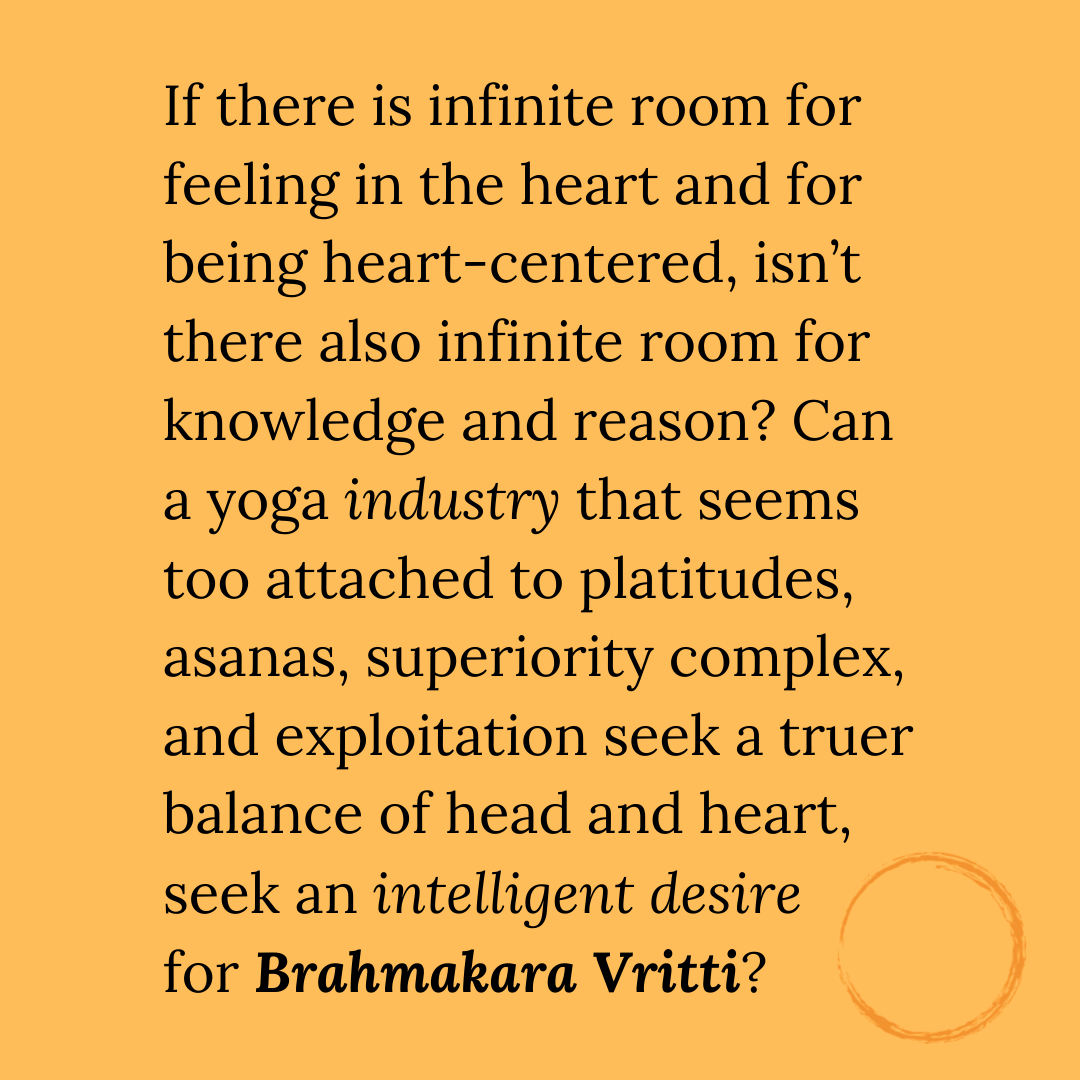
    Meditating on Brahman, a Jnana yogi might ask: “If there is infinite room for feeling in the heart and for being heart-centered, isn’t there also infinite room for knowledge and reason? Can a yoga industry that seems too attached to platitudes, asanas, superiority complexes, and exploitation seek a truer balance of head and heart, seek an intelligent desire for Bramakara Vritti?”

  • Meditations on Stories 30

    March 30th, 2021

    30 of 31 Questions for Reflection. Today’s question is inspired by reading Dṛg Dṛsya Viveka: An Inquiry Into the Seer and the Seen alongside Patanjali’s Yoga Sutras.

    What questions arise when I focus on “samadhi” as an object of Vedanta meditation?

    Patanjali’s yoga sutras teach us that when we still the fluctuations of the mind, consciousness abides in its own nature. This is the goal of yoga, to abide in pure consciousness. It’s not easy to get there even with years of practice and strict adherence to the eight limbs. The yogi likes her cave because she can easily remain absorbed in pure consciousness (in nirvikalpa samadhi: absorption without an object). Evolved sages like to spend time in meditation, absorbed in this state.

    One such sage was Swami Vivekananda, whose name was Narendra when he was a boy. Once upon a time, young Narendra was traveling with his family, and he saw a giant bee hive high up on a wall of a cliff. He wondered over how old that bee hive must be, and that wonder sent him into a state of super-consciousness, where his whole being was lost in wonder and awe at the Divine. Another time, he was meditating in Cossipore gardens and sensed a powerful light around his head. He entered deep samadhi, and when he came out of it, he did not feel that he had a body. He walked around for a few days after in  a very uneasy feeling  like he had no body.

    Nirvikalpa Samadhi is a state of consciousness in which the relative reality dissolves into the Absolute. Patanjali’s yoga sutras teach that only after a yogi has stilled the fluctuations of the mind, then consciousness abides in its own nature, and this is the goal of yoga. Vedanta says that consciousness is always abiding in its nature and the only problem is to remove one’s ignorance of that ever-present, ever-pervading pure consciousness. A yogi in a cave who experiences hours and hours in deep samadhi may think that a swami who spends hours and hours reading books and doing philosophy is missing the experience. But that swami abides in consciousness through a philosophical understanding that Brahma is never separate from material reality. Instead, material reality is not as much with us as someone like William Wordswoth may have expressed in his poem “The World is Too Much With Us.” That’s Vedanta. The material world is not with us nearly as much as Brahma is with us. Pure consciousness, pure being, and pure bliss are the most real experiences in every moment, whether we are deep in meditation or deep in study or deep in ritual or deep in prayer or deep in service or deeply in love or dreaming or fast asleep. Brahma is most real in every experience. Once Sri Ramakrishna saw an umbrella open and close and it sent him into samadhi because it reminded him of the creation and dissolution of the universe. It can be as simple as that, and it happens to us all the time.    

    Meditating on samadhi, a Jnana yogi might ask: “Vedanta says once we remove ignorance, it is easy to always realize we are immortal consciousness. Can social media help us see immortal consciousness? Keep wondering, daughter: for whom does scrolling and liking posts inspire nirvikalpa samdhi?”

    #AdvaitaVedanta #Stories #NirvikalpaSamadhi

  • Meditations on Stories 29

    March 30th, 2021

    29 of 31 Questions for Reflection. Today’s question is inspired by reading Dṛg Dṛsya Viveka: An Inquiry Into the Seer and the Seen alongside Caitanya’s Śikṣāṣṭakam.

    What questions arise when I focus on “devotion” as an object of Vedanta meditation?

    Long ago, Caitanya was a great sage, an incarnation of Krishna. He gave eight verses that teach seekers how to live as a lover devoted to service to the divine. The first verse describes the effect of chanting the maha mantra: Hare Krishna. It’s very poetic: “May Krishna sankirtana be supremely triumphant. The chanting of the names of Krishna cleanses the mirror of the heart. It extinguishes the great forest fire of samsara. It bestows moonlight on the white night-blooming lotus of supreme benefit. It gives life to the young bride of wisdom. It increases the ocean of bliss. It bestows the taste of the highest nectar at every step. It cleanses the mind completely.” (trans. Edwin Bryant).

    Back in New York City, I used to visit Dharma Mitra’s yoga studio where Krishna Das would play his harmonium and chant the Hare Krishna mantra. This was in 2002 when Krishna Das was not as popular as he is today. It was an intimate setting. It was blissful. Those kirtan sessions started me on this path with a full and open heart. Since then, I have attended many of his kirtan sessions and witnessed his following grow so much larger. Eventually, I saw he was playing at a Bhakti fest in Joshua Tree, California in 2012. I attended. That festival is where I found Kundalini Yoga in a Kia Miller class. Then, I went to Sat Nam Fest 2013 in Joshua Tree where I felt that Krishna Kaur was my teacher. I felt an intense pull: I must train as a yoga teacher with her.

    This past year, I abandoned my role as a yoga teacher. I have been studying Yoga Philosophy with embodied philosophy. The program offers a variety of teachers who are both scholars and practitioners of yoga, none practice kundalini yoga. Over these years, I have practiced hours of White Tantric yoga; I’ve attended Summer Solstice Sadhanas in New Mexico; I’ve visited the Himalayas; I’ve bowed at the Golden Temple in Amritsar; I’ve studied Gurmukhi and Sanskrit. After all this, I am happy to finally find Advaita Vedanta. I hope this philosophy can be my spiritual home. Advaita Vedanta feels so pure and straightforward for me. I am tired of whistles and bells. For now, I feel like saying this: forget yoga’s accoutrements: the music, the festivals, the trainings, the pilgrimages, lulu lemon, and cults of personality. Goodbye to all that!

    I simply enjoy the Path of Knowledge. For now, I remain devoted to the Path of Knowledge.    

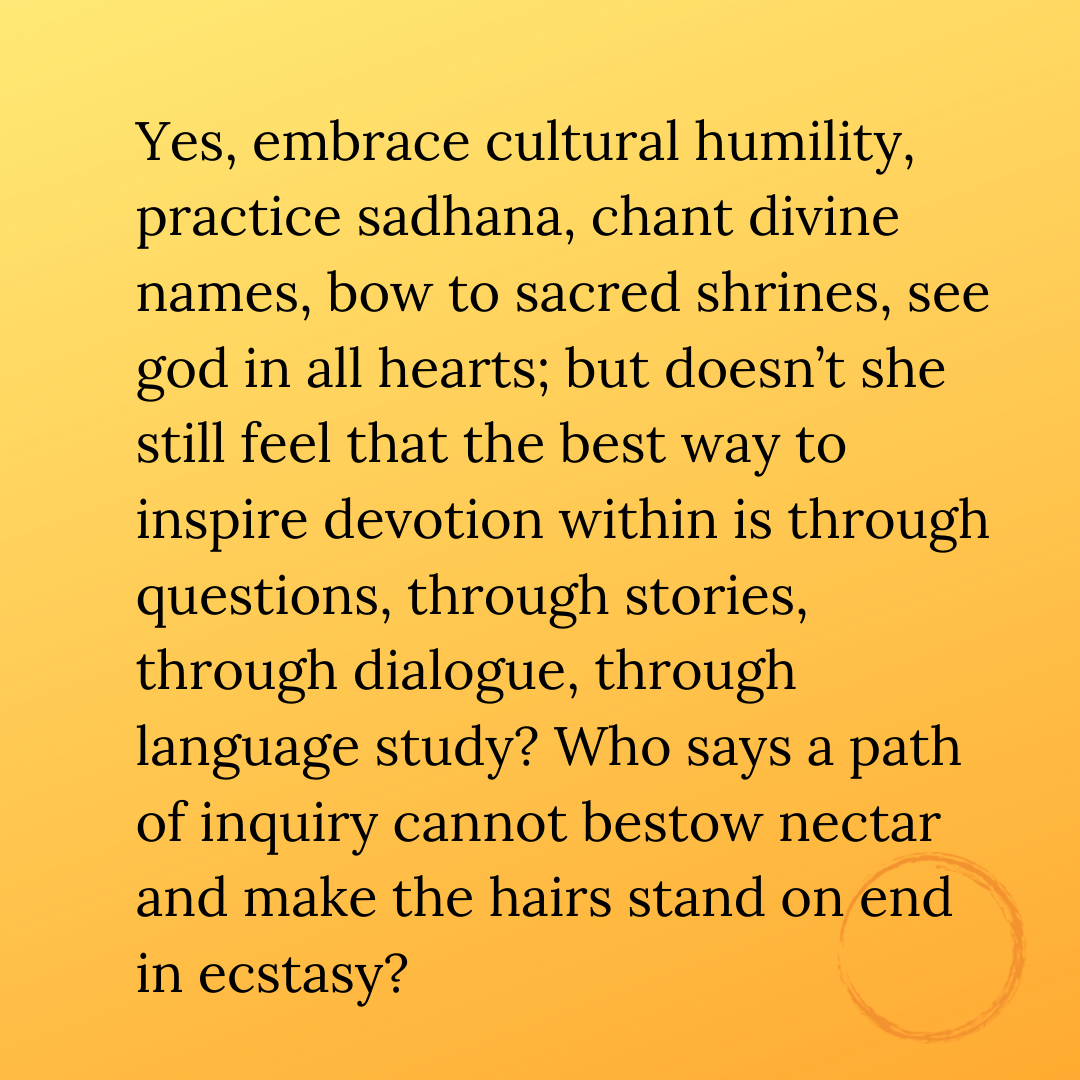
    Meditating on devotion, a Jnana yogi might ask: “Yes, embrace cultural humility, practice sadhana, chant divine names, bow to sacred shrines, see god in all hearts; but doesn’t she still feel that the best way to inspire devotion within is through questions, through stories, through dialogue, through language study? Who says a path of inquiry cannot bestow nectar and make the hairs stand on end in ecstasy?”

1 2 3 … 14
Next Page→
© Rebecca Jane Johnson and rebecca-jane-wrtier.com, 2024. Unauthorized use and/or duplication of this material without express and written permission from this site’s author and/or owner is strictly prohibited. Excerpts and links may be used, provided that full and clear credit is given to Rebecca Jane Johnson and Rebecca-jane-writer.com with appropriate and specific direction to the original content.
 

Loading Comments...
 

    • Subscribe Subscribed
      • Rebecca Jane
      • Join 145 other subscribers
      • Already have a WordPress.com account? Log in now.
      • Rebecca Jane
      • Subscribe Subscribed
      • Sign up
      • Log in
      • Report this content
      • View site in Reader
      • Manage subscriptions
      • Collapse this bar